Deep Fryer vs Dutch Oven: Which Fits Your Kitchen? (November 2026)
Pick a dedicated deep fryer for crisp results and controlled oil, or a Dutch oven for one pot that also braises and bakes. In the deep fryer vs dutch oven choice, the T-fal fryer wins for most home cooks who fry often, while cast iron suits small batches and campfire cooking.
On this page (8 sections)
- Deep fryer vs Dutch oven: which fits your counter and cooking style?
- How much oil does each one need?
- Which gives more control over oil temperature?
- How much food can you fry at once?
- Which is easier to clean and store?
- Which is safer for home frying?
- Who should buy which?
- The verdict: pick the fryer for frying, the Dutch oven for range
Pick a dedicated deep fryer for crisp results and controlled oil, or a Dutch oven for one pot that also braises and bakes. In the deep fryer vs dutch oven choice, the T-fal fryer wins for most home cooks who fry often, while cast iron suits small batches and campfire cooking.
The deep fryer vs dutch oven question usually comes down to one thing: do you want an appliance built for frying, or a pot that earns its shelf space across many meals? The fryer gives you a thermostat, a basket and a lid.
The Dutch oven gives you cast iron that also roasts, braises and bakes. This comparison checks the specs of four options, two dedicated fryers and two cast iron pots, so you can match the tool to how you cook.
For the broader appliance picture, our deep fryer guide covers fryers and turkey fryers and how to use them safely.

Deep fryer vs Dutch oven: which fits your counter and cooking style?
The fryer fits kitchens where fried food is a regular meal; the Dutch oven fits kitchens short on space but long on varied cooking. The deep fryer vs dutch oven decision starts with what else the tool has to do.
A dedicated fryer is a single-job appliance. It heats oil to a set temperature and holds it there.
A Dutch oven is a multi-job pot that works on a range, in an oven or over coals.
If you fry once a month, the pot pulls double duty. If fries and wings are a weekly habit, the fryer earns its footprint.
Here is how the four options line up on the specs that decide the choice.
| Product | Best for | Oil capacity | Wattage | Material | Our score |
|---|---|---|---|---|---|
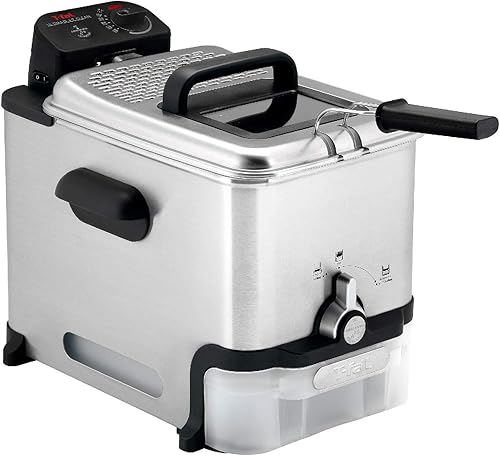
| T-fal Deep Fryer with Basket | most kitchens | 3.5 liters | 1700 W | Stainless steel | 9.7 |
| Lodge Pre-Seasoned Cast Iron Deep Camp Dutch | campfire frying | Cast iron | 9.5 | ||
| Best Choice Products 6 Quart Enamel Cast-Iron | stove and oven batches | Cast iron | 9.2 | ||
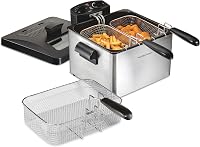
| Hamilton Beach 4.5 L Deep Fryer | large families | 4.5 liters | 1800 W | Aluminum | 9.0 |
How much oil does each one need?
The dedicated fryers use liters of oil per session; a Dutch oven uses only what you pour. That gap changes both cost and cleanup over time.
The T-fal holds 3.5 liters and the Hamilton Beach holds 4.5 liters. Both keep oil in a dedicated well that is easier to manage than an open pot on a burner.
The Lodge and Best Choice pots hold no fixed oil amount. You pour what the batch needs, so a small fry of chicken tenders may use less oil than a full fryer.
The catch is that open oil is harder to filter, store and reuse without a system built for it.
Reusing oil
The T-fal's oil filtration system automatically filters and stores oil in a sealed container. That means you can fry again without pouring oil through a strainer by hand.
The Hamilton Beach keeps oil in its pot, so you decide when to swap it.
With cast iron, oil quality is on you. Pour used oil into a container and store it for the next fry, and wipe and dry the pot before its next job.
Which gives more control over oil temperature?
The dedicated fryers hold temperature with a thermostat; cast iron relies on you and your heat source. Steady oil heat is what makes fried food crisp instead of greasy.
The T-fal adjusts from 300F to 375F, and its 1700-watt element recovers heat quickly after food goes in. The Hamilton Beach runs 265F to 375F on a dial, with an 1800-watt element and a ready light for the right moment to add food.
The T-fal's range starts higher, so it skips the very low end where the Hamilton Beach can fry at a gentler heat.
A Dutch oven has no dial. On a stove you watch the burner and test the oil; over coals you manage the fire.
That is fine for a fish fry or a batch of donuts, but it takes practice to keep the oil from swinging hot and cold. The Best Choice is rated to 480F and the Lodge to 400F, so both tolerate the heat of frying, but neither reacts to a drop in oil temperature the way a thermostat does.
A handful of cold fries can pull the oil down, and the element in a dedicated fryer pushes it back up fast.
Which fryer for which job
Use the lower end of the range for thicker foods that need time to cook through, like chicken pieces. Save the top end for thin, quick items like shoestring fries and onion rings.
If you want to understand how electric and gas fryers compare on heat and setup, read our electric deep fryer vs gas deep fryer breakdown.
How much food can you fry at once?
The Hamilton Beach handles the largest batch; the T-fal covers family meals, and the cast iron pots depend on their size. Plan around the number of people you feed and how often.
The Hamilton Beach's 4.5-liter oil well fries up to 12 cups of food, and its three baskets let you cook two foods at once or drain one while the next batch goes in. That makes it the pick for a crowd.
Use the single 12-cup basket for one big batch or the two 6-cup baskets to keep shrimp and vegetables separate.
The T-fal takes up to 2.65 pounds of food at a time. That covers generous portions for up to 6 people.
The Lodge camp oven holds 8 quarts and the Best Choice holds 6 quarts. In practice, a Dutch oven fries in smaller batches than a deep fryer of the same size, since you need headroom for bubbling oil and room to stir.
The bigger cooking area helps when you are braising or baking, not when you are frying.
Frying outdoors
Cast iron is the natural fit for outdoor frying over coals. The Lodge's flanged lid holds heat above and below, and the bail handle lets you lift the pot off hot coals.
Its three legs keep the oven spaced over the coals so the bottom does not scorch. When the frying is done, the lid inverts and works as a griddle for the rest of the meal.
For a bigger outdoor cook, our electric vs propane turkey fryer comparison covers the larger setups.
Which is easier to clean and store?
The deep fryers break down for cleaning; the Dutch ovens are simple to wipe but heavy to handle. Cleanup is where most people decide whether an appliance was worth it.
The T-fal's basket, bowl, lid and oil box come apart for cleaning. The Hamilton Beach goes further: its oil pot, baskets and lid are dishwasher safe, and the heating element hand-washes in warm soapy water.
A vented lid with a window keeps splatter off the surrounding counter.
The cast iron pots are hand wash only. The Best Choice enamel interior wipes clean more easily than bare cast iron, while the Lodge needs the usual cast iron care: dry it well and keep its seasoning intact.
The Lodge arrives pre-seasoned, so it is ready to cook on the first outing, but it still wants a dry cloth after every wash.
Counter and cabinet space
A deep fryer lives on the counter and takes up a chunk of it. The T-fal measures 18.3 by 13.7 by 14.8 inches and weighs 5.6 kg; the Hamilton Beach is 21.4 by 14.1 by 10.5 inches.
Both need clearance for the lid to open and for the cord to reach an outlet.
The Lodge camp oven weighs 19.4 pounds and the Best Choice 14 pounds. A Dutch oven stores in a cabinet and moves to the stove or the fire when needed.
The Lodge's 8-quart size measures 12.01 by 12.01 by 8.6 inches, so plan a deep shelf for it. If counter space is tight and you fry rarely, the pot wins on storage.
Which is safer for home frying?
A deep fryer adds built-in safety features; a Dutch oven leaves more to your attention and setup. Hot oil is the main risk either way.
The T-fal comes with a locking lid, a large viewing window, cool-touch handles and automatic shut-off. The Hamilton Beach adds a breakaway cord that releases if snagged.
Both keep the oil covered while food cooks.
With cast iron, splatter control and heat management are manual. Keep the pot stable, keep kids and pets back, and never move a pot of hot oil.
The Lodge's bail handle lets you lift the pot without grabbing hot cast iron, and its legs keep the base steady over coals. On a stove, use a burner that matches the pot's base so it does not tip.
Whether you fry indoors or out, read our deep fryer for home use guide for matching a fryer to your kitchen before you buy.
Who should buy which?
Buy the T-fal fryer if you fry often and want set-and-forget oil temperature. Buy a Dutch oven if you want one pot for many jobs.
The best fit depends on your weekly menu and your storage.
Buy the T-fal Deep Fryer with Basket if:
You fry a few times a month and want crisp results without guessing oil heat. Its 300F to 375F thermostat, locking lid and automatic oil filtration turn a messy job into a routine.
It handles up to 2.65 pounds of food, enough for most families. The sealed oil container means you are not hunting for a jar to store used oil in.
Buy the Lodge Pre-Seasoned Cast Iron Deep Camp Dutch if:
You cook outdoors and want cast iron that doubles as a griddle. Its flanged lid holds coals, and its bail handle makes it easy to move on and off the fire.
It also braises and bakes between fry days. The pre-seasoned finish means no long break-in period, and the iron and oil construction keeps the cooking surface free of a synthetic coating.
Buy the Best Choice Products 6 Quart Enamel Cast-Iron if:
You want a lighter Dutch oven for stove and oven use. The enamel interior wipes clean, and the oven-safe rating goes to 480F, so you can fry on the range and bake in the same pot.
The condensation bumps on the lid help seal in moisture, which matters more for braising than frying but makes the pot useful all week. The dual handles and 14-pound weight make it easier to move than the Lodge.
Buy the Hamilton Beach 4.5 L Deep Fryer if:
You feed a crowd. The three baskets, 12-cup batch size and dishwasher-safe parts suit big fry nights, and the vented lid keeps the mess contained.
The breakaway cord adds peace of mind in a busy kitchen. If you regularly fry for more than six people, the extra oil capacity and the basket options are worth the counter space.
The verdict: pick the fryer for frying, the Dutch oven for range
For most readers asking deep fryer vs dutch oven, the T-fal fryer is the pick. It sets oil temperature for you, filters and stores the oil, and covers a family meal in one batch.
That combination is hard to match with a pot and a burner.
Choose a Dutch oven instead when frying is occasional and you want a pot that braises, bakes and works over coals. The Lodge suits campfire cooks, and the Best Choice suits indoor stove-to-oven meals.
For a large household, the Hamilton Beach's three baskets do the most frying at once.
Start with how often you fry. If it is a weekly habit, the fryer earns its counter space; if it is an occasional treat, cast iron gives you more meals per square foot.
Either way, keep safety first: cover the oil, watch the heat and keep the handles clear.
Frequently asked questions
Is a deep fryer better than a Dutch oven for frying?
A dedicated deep fryer is better for frequent frying because its thermostat holds oil at a set temperature and its basket and lid manage splatter. A Dutch oven works for small batches, but you have to watch oil heat yourself and there is no filtration system.
Can you deep fry in a Dutch oven?
Yes, a Dutch oven can deep fry on a stove, grill or campfire as long as it has a heat source and enough oil to cover the food. Fill it no more than about half full so hot oil has room to bubble without spilling.
How much oil does a deep fryer use compared with a Dutch oven?
The T-fal fryer holds 3.5 liters of oil and the Hamilton Beach holds 4.5 liters. A Dutch oven uses only as much oil as you pour in, so small batches can need less, though you lose the filtration and storage that the fryers add.
Which is safer for home frying, a deep fryer or a Dutch oven?
A deep fryer adds safety features like a locking lid, a viewing window, cool-touch handles and automatic shut-off. A Dutch oven on a stove gives you no built-in lid lock or shut-off, so you manage splatter and heat by hand.
Which one should I buy first?
Buy a deep fryer first if fried food is a regular part of your meals and you want controlled oil heat. Buy a Dutch oven first if you want one pot for frying, braising and baking, or if you cook outdoors over coals.