Electric Deep Fryer vs Gas Deep Fryer: Which Fits? (November 2026)
For an electric deep fryer vs gas deep fryer choice, pick electric for small indoor meals and propane for larger outdoor cooking sessions. Choose your cooking location first, then match the basket space and oil handling to your usual meals.
On this page (8 sections)
- Electric deep fryer vs gas deep fryer: which fits your space?
- Which product suits your normal meals?
- How much capacity do you actually need?
- Does propane give you better heat control?
- What should you prepare before switching on the heat?
- Which common mistakes spoil the result?
- What does cleanup and oil care involve?
- Which electric or gas deep fryer should you choose?
For an electric deep fryer vs gas deep fryer choice, pick electric for small indoor meals and propane for larger outdoor cooking sessions. Start with where you can safely cook, then choose the basket layout and oil volume your usual meals need.
The Hamilton Beach suits a few portions at home. GasOne fits outdoor group meals with one shared pot, while VEVOR suits menus that benefit from separate oil tanks.
Here, gas means the outdoor propane models below, rather than a fixed commercial kitchen appliance. For a wider look at fryer types, start with our deep fryer buying guide.


Electric deep fryer vs gas deep fryer: which fits your space?
Choose the cooking location before the fuel type. The electric option fits indoor home cooking; both propane options require a suitable outdoor area.
For indoor frying, you need a stable, heat-resistant work surface with the clearances required by the manual. Check that the cord reaches a suitable outlet without crossing a sink, walkway or busy prep area.
An electric fryer still releases cooking smells and steam. Plan ventilation, keep nearby surfaces clear and place the appliance where nobody needs to reach across hot oil.
Outdoor frying needs firm, level ground and room around the burner, pot and propane cylinder. Keep the setup away from buildings, overhangs, dry plants and foot traffic according to the manual's clearance rules.
A garage, enclosed porch or sheltered corner with poor airflow is not a suitable substitute. Rain and strong wind are also reasons to postpone an outdoor frying session.
Our deep fryer safety and care guides cover the practical steps that go with choosing and using a fryer.
Electric versus gas deep fryers for renters and small homes
An indoor electric fryer is the practical choice when outdoor cooking space is limited. Renters should check appliance and fuel rules before buying, especially if the only outdoor area is a shared balcony.
Think about storage as well as cooking space. You need somewhere to keep the fryer dry and secure, plus room to cool and handle its oil after dinner.
If neither setup fits your home, skip both for now. A fryer that depends on an unsafe location or blocks your normal kitchen work is a poor match, regardless of capacity.
Which product suits your normal meals?
Choose Hamilton Beach for modest indoor portions, GasOne for shared-oil outdoor batches, and VEVOR for separate outdoor cooking tasks. Their layouts matter more than choosing the largest vessel.
Hamilton Beach: for small indoor meals
The Hamilton Beach has a 2 liter oil capacity and can cook up to 6 cups of fries or chicken tenders. Its 1500-watt immersed element heats the oil, while adjustable temperature and a ready light help guide cooking.
The lid can stay closed while you lift the basket to drain, and the viewing window lets you check food without opening it. Those features suit cooks who want to keep everyday frying contained on the counter.
Cool-touch sides help protect against accidental contact with the outer sides. The basket, oil, steam and other hot parts still need careful handling.
Choose it for a side dish or a small meal where a few rounds are acceptable. Skip it if serving a crowd would mean leaving the first portions waiting through many later batches.
GasOne: for outdoor meals with shared oil
GasOne combines an 18 quart aluminum pot, a cast iron burner, two strainer baskets and a thermometer. It suits outdoor fish fries or family meals where you want to organize food in separate baskets.
Both baskets sit in the same oil. You can keep pieces apart for easier loading and lifting, but you cannot give each basket a different oil temperature.
Choose it when one shared cooking temperature fits your menu. Skip it if keeping fish flavors away from another dish is a main reason for buying two baskets.
Also consider the full session rather than just frying time. Bringing out fuel and cookware, heating a larger oil volume and cleaning afterward makes more sense for a planned gathering than a small snack.
VEVOR: for outdoor menus needing separate tanks
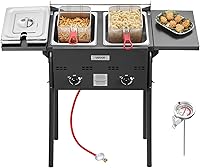
VEVOR has two oil tanks with independent fire controls, plus baskets, lids, a thermometer and side tables. This layout suits a cook managing foods with different cooking schedules or temperature needs.
Separate tanks can help keep strongly flavored oil apart from another batch. They do not make a shared cooking area suitable for allergy-safe preparation, which also depends on utensils, handling and other contact.
The frame measures 44.7 inches wide and weighs 44 pounds. Plan a storage spot and a clear route to the cooking area rather than treating it like a countertop appliance.
VEVOR's capacity descriptions differ between 16 quarts, 4 gallons and 18 liters. Confirm the usable oil amount before ordering, and follow each tank's Max Fill Line during use.
Choose it when separate controls solve a regular cooking problem. Skip it if you usually fry one food at a time or lack space for assembly, cooking and storage.
How much capacity do you actually need?
Match capacity to your usual meal, not your biggest annual gathering. A large fryer adds oil handling and storage work even when you cook only a little food.
Start by counting the portions you want ready together. Then consider the food's shape: long fish pieces, breaded chicken and loose fries use basket space differently.
Do not confuse oil capacity with food capacity. A vessel's total volume also leaves space for food displacement and bubbling, so filling it to the rim is never a cooking plan.
Food needs room for oil to move around it. Packing a basket tightly can cause pieces to stick and can pull the oil temperature down sharply.
A smaller fryer can serve more people through several rounds, but someone must keep cooking while earlier portions wait. If eating together matters, that tradeoff may justify a larger setup.
For occasional parties, simplify the menu before buying more capacity. One fried dish alongside food prepared another way reduces the demand on the fryer and the cook.
Our guide to choosing a deep fryer for home use helps connect serving size with everyday kitchen needs.
Does propane give you better heat control?
Propane gives you flame control, while the Hamilton Beach gives you an adjustable temperature setting. Neither fuel type removes the need to watch how the oil responds when food goes in.
There are no comparable heat-up times for these models, so choosing a speed winner would be guesswork. A larger burner can also be heating much more oil than a small electric element.
The more useful question is how you will manage each batch. With propane, watch the thermometer and adjust the flame as needed rather than assuming one knob position holds the oil steady.
With electric, use the temperature control and ready indicator as directed. Give the oil time to recover between rounds instead of adding the next basket as soon as the last one comes out.
Two baskets do not automatically mean twice the useful output. Adding both full baskets together can cool a shared pot more than adding a modest batch.
Use the recipe's oil temperature and check food doneness separately. Browning alone does not confirm that meat or poultry is cooked through.
What should you prepare before switching on the heat?
Prepare the food, draining area and safety supplies before heating oil. Once frying starts, the cook needs to stay with the appliance rather than leave to find a tray or utensil.
For electric setup, inspect the cord and plug, dry the surrounding surface and follow the manual's connection instructions. Avoid improvised extension arrangements or sharing an overloaded outlet with another high-draw appliance.
For propane, complete assembly and check that the stand and pot sit securely. Inspect the hose and connections, then follow the manual's leak-check procedure before lighting; never use a flame to check for leaks.
Measure oil while it is cold, following the fryer's fill instructions and allowing for the food. Do not copy a fill amount from a different pot or assume a bigger basket permits more oil.
Dry the basket, cookware and food surfaces before they approach the oil. Thaw food when required by the fryer and recipe instructions, and never add ice or water to hot oil.
Set out a draining rack or tray, suitable utensils and a separate place for raw food. Keep children and pets outside the cooking area throughout heating, frying and cooling.
Keep a suitable cooking-oil fire extinguisher accessible and know how to use it. Never pour water on an oil fire or try to carry a burning pot.
Which common mistakes spoil the result?
Overloading, wet food and rushing between batches cause avoidable frying problems. Good results depend on steady cooking habits as much as the fuel source.
Loading too much food at once
Use a loose batch that leaves room around the pieces. If food sticks together or the oil temperature falls heavily, reduce the next batch rather than simply turning the heat higher.
Shake off loose crumbs and excess coating before lowering food carefully. Loose bits collect in the oil and can darken or burn during later rounds.
Treating two baskets as separate cooking systems
In a shared pot, both baskets use the same oil and temperature. Choose foods that can cook under the same conditions, then stagger their start times if their cooking times differ.
Use separate utensils for raw and cooked food. A second basket does not solve cross-contact caused by a reused tray or pair of tongs.
Letting the draining stage become an afterthought
Have the landing area ready before lifting a basket. Drain it in the position allowed by the fryer instructions, then transfer food without carrying dripping oil across the kitchen or yard.
Avoid piling finished food into a deep bowl if you want the coating to stay crisp. A rack allows steam to escape while the next batch cooks.
What does cleanup and oil care involve?
Expect less oil handling with the small electric fryer and more cookware work with the outdoor models. Choose a setup you are willing to clean after an ordinary meal, not just after a special event.
The Hamilton Beach has a removable lid, heating element and enamel-coated oil tank. Follow its cleaning instructions for each part, and keep electrical components out of water unless specifically permitted.
Outdoor cookware also needs full cooling before draining or washing. Keep water away from burner and fuel components, and dry cleaned parts before storage.
Never move a fryer full of hot oil. Leave the cooking area protected while it cools, even after the burner is off or the appliance is unplugged.
If you plan to reuse oil, strain out crumbs once it has cooled enough for safe handling and store it in a clean, sealed container. Label it by the foods cooked in it if flavors matter.
Discard oil that smells rancid, foams unusually or smokes at normal cooking temperatures. Filtering removes food particles, but it cannot restore worn-out oil.
Our guide to filtering and reusing deep fryer oil explains that routine. For washing the appliance itself, follow our deep fryer cleaning guide alongside the model's manual.
Which electric or gas deep fryer should you choose?
Choose the fryer that fits your regular meals and the full cleanup afterward. For this electric deep fryer vs gas deep fryer decision, use these three buyer patterns.
Pick Hamilton Beach if you fry modest indoor portions and prefer a contained countertop setup. Accept several cooking rounds when guests increase the serving count.
Pick GasOne if you have a suitable outdoor spot and regularly cook group meals that can share oil and temperature. Its basket layout suits organizing batches without needing separate tanks.
Pick VEVOR if independent outdoor cooking zones will help with your normal menu. Make that choice only after confirming its usable capacity and planning room for the frame.
If indoor frying is your clear choice, compare the best deep fryers by batch size and cleaning design. If propane fits, use our outdoor deep fryer guide to plan the cooking area before ordering.
Frequently asked questions
Is an electric or gas deep fryer better?
Electric is the better fit for small indoor meals, while these propane models suit outdoor cooking for groups. Choose by your available cooking space and normal meal size first, then compare basket layout, temperature controls and the amount of oil you'll need to handle after each session.
Can you use a propane deep fryer indoors?
No, these propane deep fryers belong outdoors, away from enclosed spaces such as kitchens, garages and enclosed porches; an open garage door does not turn a garage into a suitable frying area. Follow the manual's clearance rules, and choose an indoor electric fryer if you lack a suitable outdoor spot.
Does an electric fryer heat oil faster than a gas fryer?
Fuel alone doesn't decide heat-up speed; the amount of oil, starting temperature and heat reaching the pot all matter, and these models have no comparable heat-up times. Choose around batch size and controls instead, then let the oil return to the recipe's temperature between rounds.
Which deep fryer holds more oil?
The outdoor propane options offer larger vessels than the Hamilton Beach's 2 liter tank, and GasOne has an 18 quart pot; pot volume is not a safe oil fill instruction. VEVOR's capacity figures differ, so confirm its usable oil amount and always follow the marked fill limits.
Which fryer is easier to clean?
The Hamilton Beach is the more manageable choice for small meals because it uses a smaller oil volume and has removable cleaning parts; a larger outdoor setup means handling more oil and larger cookware. Let everything cool fully, then follow the manual for washing, drying and protecting burner components.