Is a Deep Fryer Worth It?
A deep fryer is worth it for regular frying with less manual temperature adjustment. Choose one only if you also have space for safe use and a plan for cooling, cleaning, and storing the oil.
On this page (8 sections)
- Is a deep fryer worth it for your cooking habits?
- What should you check before choosing a fryer?
- Which fryer suits your routine?
- How do you set up and use a fryer well?
- Is a deep fryer safer than a pot?
- Does oil filtration make a fryer worth buying?
- What cleanup mistakes should you avoid?
- So, is a deep fryer worth it?
A deep fryer is worth it if you fry regularly and want easier temperature control and food handling. For occasional meals, a pot and thermometer may meet your needs without another appliance to store.
The real commitment comes after dinner: oil must cool, crumbs need removing, and parts need washing. Choose a fryer only if that routine fits your kitchen as well as the cooking does.
Is a deep fryer worth it for your cooking habits?
A dedicated fryer makes sense when you already cook fried food several times a month. That's a useful buying rule, rather than a fixed cutoff: repeated batches give its controls and food-handling tools more chances to help.
Think about your last few meals, not recipes you might try someday. Regular fries, chicken tenders, or onion rings make a stronger case than one annual party.
Also consider when you serve food. If everyone needs to eat together, a fryer that forces many small batches can leave the first portions waiting while the rest cook.
For an overview of fryer types and their uses, start with our deep fryer guide.
Is deep fryer temperature control worth it?
Temperature control is worth having if adjusting stove heat is your main frustration. An adjustable thermostat lets you select different frying temperatures, while a fixed automatic setting suits cooks who want fewer decisions.
Adding cold food lowers oil temperature, so controls don't remove the need for sensible batch sizes. Let the oil return to the recommended temperature between batches, and check food doneness separately from the fryer's ready light.
What should you check before choosing a fryer?
Choose by batch size, usable space, and cleanup method, in that order. Oil capacity alone doesn't tell you how much food you can cook at once.
A fryer's oil capacity is the amount of oil it holds, not its food allowance. Follow the minimum and maximum fill marks and the food limits in its instructions, even when you're making a small serving.
Measure the counter where you'll cook and the cupboard where you'll store it. Leave the ventilation clearance required by the manual, plus room to lift the basket, open the lid, and set down cooked food.
Consider oil handling before choosing a larger model. A big reservoir means more oil to buy, cool, strain, store, or discard, even if you only want a few pieces of food.
Our guide to choosing a deep fryer for home use explains how these choices fit different households.
Which fryer suits your routine?
Choose the simplest model that solves your main frying problem. These four options serve different needs, from basic controls to larger batches and built-in oil handling.
Hamilton Beach: for regular basket frying
The Hamilton Beach 8 Cup Deep Fryer suits cooks who want adjustable heat and a basket for routine meals. It holds 2 liters of oil and can cook up to 6 cups of fries or chicken tenders.
Its viewing window lets you watch food with the lid closed, and the basket can lift to drain without opening the lid. That's useful if splatter around an open pot is your main annoyance.
The removable lid, heating element, and enamel-coated oil tank give you access for cleanup. Skip it if your main priority is built-in oil filtration, or if your usual meal would require too many batches.
Presto GranPappy: for cooks who want fewer settings
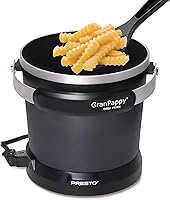
The Presto GranPappy suits cooks who want automatic heat without choosing a temperature. It uses 6 cups of oil and comes with a scoop for lifting, turning, and draining food.
That scoop-based approach fits someone comfortable handling food in smaller portions. Choose a basket model instead if you'd rather lift a batch together, and skip the GranPappy if your recipes call for selectable heat levels.
Its snap-on lid stores cooled oil between sessions; it isn't a cooking lid. The unit isn't immersible, so plan to clean it without putting the appliance underwater.
De'Longhi Livenza: for larger meals and easier draining
The De'Longhi Livenza suits households that regularly cook larger quantities and want to avoid tipping a full oil tank. Its 1-gallon oil capacity and adjustable thermostat fit a broader cooking routine than occasional single portions.
A front drain tube directs cooled oil into a storage container. Set up a suitable container before opening the drain, and follow the manual's cooling instructions.
Its footprint is 12.5 inches deep by 18 inches wide, so measure your work area carefully. Skip it if you usually cook small portions or lack space to handle the drained oil.
All-Clad: for households that regularly reuse oil
The All-Clad Deep Fryer With Oil Filtration suits cooks who want filtration and oil storage built into the appliance. It holds 3.5 liters of oil and can fry up to 2.65 pounds of food.
Its adjustable range runs from 300°F to 375°F. The basket, bowl, lid, and oil box are dishwasher-safe, which suits households that prefer washing removable parts that way.
Skip it if you rarely fry or won't reuse suitable oil, since filtration then solves little of your workload. Also measure storage space: at 18.2 inches deep and 14.7 inches tall, it needs a planned home.
How do you set up and use a fryer well?
Give the fryer a stable, dry work area before adding oil. Keep it away from counter edges, water, children, and anything that could pull or snag the cord.
Fill only as directed, then preheat before loading food. Have a draining rack or suitable tray ready so you don't have to search for somewhere to put a hot basket.
Remove excess surface moisture and loose ice from food. Follow the manual for frozen food, and never put a frozen block or wet food into hot oil.
Lower food slowly and keep batches loose enough for oil to circulate. Overcrowding drops the temperature and can leave food greasy or unevenly cooked.
Use the ready light as a heat cue, not a doneness signal. For foods such as chicken, use an appropriate food thermometer to check that the center is safely cooked.
Is a deep fryer safer than a pot?
A fryer can make temperature adjustment and food lifting easier, but both methods require close attention around hot oil. A lid or cool-touch handle doesn't make the oil safe to touch.
Stay nearby while cooking, keep within fill limits, and don't carry or reposition a fryer containing hot oil. Follow the model's directions for lid use rather than assuming every lid belongs on during cooking.
Never use water on an oil fire. If fire spreads or you can't respond safely, leave the area and call emergency services.
Our turkey fryer safety checklist covers broader hot-oil hazards, though countertop setup must follow the countertop fryer's own instructions.
Does oil filtration make a fryer worth buying?
Filtration is worth considering when you fry often enough to reuse suitable oil. It removes food debris and can simplify handling, but it doesn't restore oil damaged by heat or poor storage.
A drain and a filter do different jobs. The Livenza helps transfer oil out of the tank, while the All-Clad includes filtration and storage.
For the buying tradeoffs, read our guide to deep fryers with oil filtration. For the routine itself, follow our guide to filtering and reusing deep fryer oil.
What cleanup mistakes should you avoid?
Avoid draining hot oil, leaving food debris behind, and refilling damp parts. Unplug the fryer and let the oil cool as directed before handling it.
Strain suitable oil into an appropriate clean container, then store it according to the oil and fryer instructions. Keep fish oil separate from oil intended for foods where that flavor would be unwelcome.
Don't pour used oil down the sink. Use an accepted local disposal or recycling method, and wash removable parts only as their instructions allow.
Dry everything fully before reassembly, and never immerse electrical parts. Our guide to cleaning a deep fryer walks through the process.
So, is a deep fryer worth it?
A deep fryer is worth it when regular use justifies the space and oil routine. Choose Hamilton Beach for adjustable basket frying, Presto for fewer settings, Livenza for larger meals and draining, or All-Clad for built-in filtration and storage.
Skip a dedicated fryer if you fry rarely or have nowhere to leave it safely while the oil cools. If space is your only obstacle, compare the limits and layouts in our small deep fryer guide.
Before ordering, name the exact chore you want the appliance to improve. Then use our best deep fryers guide to match that need to a model.
Frequently asked questions
Is a deep fryer worth it for one person?
Yes, if you fry regularly and can use a small model without wasting food or oil; check its minimum oil fill rather than judging by your serving size alone, and allow space for cooling after cooking. For rare single servings, a pot and thermometer may be enough.
Is an electric deep fryer cheaper than frying in a pot?
Not automatically, because an electric fryer adds an appliance to buy and may require more oil than your usual pot; compare the minimum oil fill, how often you'll cook, and the cleaning routine. Temperature control and easier food handling are stronger reasons to choose one than assumed savings.
How often should you change deep fryer oil?
Change oil according to its condition and the fryer and oil manufacturers' guidance, rather than a fixed number of meals; food crumbs, heat, and storage affect reuse. Discard oil with an off smell, persistent foaming, or unusual smoking at normal frying heat; filtering removes debris but doesn't restore worn-out oil.
Are deep fryers hard to clean?
Deep fryers need a planned cleanup routine because oil must cool before draining, and food residue needs removing from the cooking area; removable parts and drains can reduce awkward handling. Wash only the parts approved for washing or dishwashing, keep electrical parts dry, and dry everything fully before refilling.