How Much Oil Does a Deep Fryer Use?
A home deep fryer usually uses 6 to 8 cups of oil, which is about 1.4 to 2 liters. Countertop models follow the fill line printed inside the tank, so the amount of oil a deep fryer uses depends on its capacity and basket size.
On this page (9 sections)
- How much oil does a deep fryer use per batch?
- What do the tank fill marks mean?
- How much oil does a small deep fryer use?
- How much oil does a bucket-style fryer use?
- How do you measure oil without a fill line?
- How much oil should you use for a small batch?
- How many fries can one fill cook?
- How do you keep the oil amount clean and safe?
- Which fryer size should you pick?
A home deep fryer usually uses 6 to 8 cups of oil, which is about 1.4 to 2 liters. Countertop models follow the fill line printed inside the tank, so the amount of oil a deep fryer uses depends on its capacity and basket size.
A compact 1.8 liter fryer sits at the low end, while a 2 liter model and a six-cup bucket sit near the middle.
The tank mark, not the recipe, decides the fill.
Oil is the main cost of frying at home, so knowing the working amount helps you plan batches and storage. It also keeps you safe, since an overfilled fryer can spill when food goes in.
This guide covers typical amounts by fryer size, how to measure the fill line, and how to get more fries from each tank.
How much oil does a deep fryer use per batch?
A typical home fryer takes 6 to 8 cups, or 1.4 to 2 liters, and that amount stays in the tank for several batches. You don't pour fresh oil for every fry.
The oil is heated, used, filtered, and reused until it wears out.
A six-cup fryer makes about six servings of french fries from one fill. A 2 liter fryer holds 68 ounces and suits a family meal.
Smaller batches use the same oil amount, because the tank is the limit, not the food.
The fill also affects how well the fryer holds temperature. A full tank recovers faster after cold food goes in.
A nearly empty tank swings cooler and gives greasy results.
What do the tank fill marks mean?
The upper and lower lines mark the safe oil range, and the upper line is the target for most frying. The lower line is the minimum that keeps food covered.
Anything between them works for small batches.
Pour to the upper mark for a full batch. Stay at or near the lower mark when frying a light snack for one or two people.
Never pour past the top line, even if you think more oil will cook faster.
Fill with room temperature oil before you turn the fryer on. Hot oil added to a hot tank can splash.
Wipe any drips off the outside of the tank before heating.
How much oil does a small deep fryer use?
A compact deep fryer uses about 1.8 to 2 liters, or roughly 6 to 8 cups. These are the sizes built for countertops and smaller kitchens.
They still fry enough for a family of four in two batches.
The T-fal EZ Clean Compact has a 1.8 liter oil capacity and handles up to 1.7 pounds of fresh french fries. Its filtration system drains the oil into a storage box after frying.
A deep fryer oil filter setup like this keeps the oil cleaner between uses and makes each fill last longer.
The OVENTE model has a 2 liter tank with a lid, viewing window, and replaceable odor filters. The lid keeps splatter in and the window lets you watch browning without opening it.
Both sizes use less oil than a stovetop pot of the same depth. A wide pan needs more oil to reach the same frying depth, which is why countertop fryers are cheaper to run.
How much oil does a bucket-style fryer use?
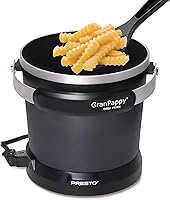
The Presto GranPappy uses six cups of oil and makes six servings of french fries. It's a bucket-shaped countertop fryer with a scoop instead of a basket.
Six cups is about 1.4 liters.
The thermostat keeps the oil at frying temperature on its own. There are no controls to set.
A snap-on lid covers the tank so you can store the oil without spills or odors. The ceramic nonstick surface is PFAS free.
This size suits a household that fries once or twice a week. Six cups is enough for one full batch of fries or a few pieces of chicken.
For bigger batches or a crowd, a 2 liter fryer gives more room.
How do you measure oil without a fill line?
Use the cup amount in the fryer manual, or measure with water first and mark the level. If the tank marks are worn or you bought the fryer used, the manual is the best source.
Most makers list the oil capacity in cups or liters.
If the manual isn't at hand, fill the cold tank with water to the level you'd use for oil. Dry it fully, then mark that level with a strip of tape on the outside.
Never heat water in the fryer and never mix water with hot oil.
Checking the fryer manual fill guidance takes a minute and saves a wasted bottle of oil. It also tells you the minimum amount, which matters for smaller batches.
How many cups is a liter of oil?
One liter is about 4.2 cups. So a 1.8 liter fryer takes about 7.6 cups, and a 2 liter fryer takes about 8.5 cups.
Many makers round these to six, seven, or eight cups in the manual.
Use the maker's stated amount when it's in cups. The metric figure is the tank volume, while the cup figure is often set slightly lower to leave headroom for bubbling food.
How much oil should you use for a small batch?
Use the lower fill mark for a small batch and keep food in one layer. The tank doesn't need to be full to fry a snack.
The key is that the food sits mostly in the oil and can move freely.
A basket that's too full drops the oil temperature and makes food greasy. Fry in batches that cover no more than half the basket floor.
Shake off loose coating before it goes in, so crumbs don't build up in the oil.
Ladle out stray crumbs between batches. Crumbs burn, darken the oil, and shorten how long each fill lasts.
A skimmer or slotted spoon works for this.
How many fries can one fill cook?
Plan on two to three batches per fill, or about six servings from a six-cup tank. The exact number depends on how much food you put in each batch and how hot the oil stays.
Rest the fryer between batches so it can recover.
Batch size matters more than fill size here. Two modest batches cook better than one crowded one.
Food that touches its neighbors cooks unevenly and can stick together.
Let the oil return to the set temperature between batches. Most fryers show this with a light or a quiet cycle.
Cooking before the oil recovers gives pale, oily fries.
How do you keep the oil amount clean and safe?
Filter or strain the oil after each session and store it covered, so the fill stays usable longer. Used oil with floating crumbs and burnt bits breaks down faster.
A quick strain after the oil cools is the cheapest way to extend it.
Let the oil cool completely before handling it. Never move a fryer with hot oil in it.
Wipe the outside of the tank and keep the lid on when the fryer is stored.
The T-fal's built-in filtration drains oil into its storage box, so you don't pour it by hand. For other models, strain through a fine mesh or a paper filter into a clean jar.
Our guide on how to clean a deep fryer covers the boil-out step that removes old oil film from the tank.
Change the oil when it smells stale, looks dark, foams around the edges, or smokes before it reaches the set temperature. Old oil transfers off flavors to fresh food and smokes more.
When is it time for a new fill?
Replace oil after about 4 to 6 uses for light foods like fries. Cut that short for breaded items, fish, or strongly seasoned foods.
Each of those leaves flavors and particles behind.
Store used oil in a sealed container away from light and heat. Keep it cool if you can.
Don't top up old oil with fresh oil in the same tank and expect a clean result. Empty and wipe the tank before a fresh fill.
Does fryer size change your oil bill?
Yes. A six-cup fryer uses about 1.4 liters per fill, while a 2 liter fryer uses about 2 liters.
That's roughly 40 percent more oil each time. Over a year of regular frying, the smaller tank saves money.
Weigh the oil cost against batch size. A compact fryer needs more batches for a big meal.
Pick the size that matches how many people you usually cook for, and compare models in our guide to the best deep fryer for home use.
Which fryer size should you pick?
Pick a six-cup fryer for one or two people, and a 2 liter fryer for a family of four or more. The oil amount you'll pour each time follows from that choice.
A compact 1.8 liter tank splits the difference and drains its oil for storage.
The amount of oil a deep fryer uses stays in the tank between sessions, so a lid and a filter matter as much as tank size. Check the fill marks before the first fry, fill to the upper line for a full batch, and strain the oil after each use.
If you're still deciding on a model, our best deep fryer roundup compares tanks, lids, and filtering features. Match the oil amount to your household size first, and the rest of the choice gets easier.
Frequently asked questions
How do I know when the oil level is right?
The tank has fill lines or the manual gives a cup or liter amount. Pour to the upper mark and never above it.
Too little oil leaves food exposed and it browns unevenly, while too much oil can spill or froth over the rim when food goes in.
How many times can you reuse deep fryer oil?
Oil lasts for roughly 4 to 6 batches of light foods when it's filtered after each use. Breaded or strongly flavored foods shorten that.
Replace it when it smells off, looks dark, foams at the edges, or smokes before it reaches the set temperature.
Can you put too little oil in a deep fryer?
Yes. Food needs to be mostly covered so it cooks evenly.
With too little oil the basket sits partly in air, browning is patchy, and the element can run hotter than intended.
Fill to the low mark at minimum and keep food in small batches.
Does more oil mean faster frying?
No. More oil holds heat better when a big batch goes in, but the temperature setting controls cooking.
A fryer filled to its proper line recovers faster than one with too little oil.
Overfilling adds heat-up time and raises the risk of spills.